
Pouring concrete since 2017
Homer Glen Concrete Contractor: Joints Cut So Cracks Stay Out of Sight
Driveways, patios, walks, stamped concrete and foundations, with every control joint mapped before the pour and a stone base built up for the heavy clay found under most Homer Glen yards.
- Towns we pour inLockport, Lemont, Orland Park, Mokena, Palos Park
- On the jobSince 2017
Settled before the forms go in
Pouring since 2017
Driveways, patios, walks and footings have been our whole business since 2017.
Joint map first
You see where each control joint lands before a single form board is staked.
Base by the inch
Dig depth and compacted stone thickness are written down, not guessed on pour day.
Fall checked twice
Grade is shot when the forms go in and again before the truck arrives.
Yard handed back
Forms pulled, old concrete gone, soil raked back along the new edges.
Concrete Work We Pour for Homer Glen Homes and Businesses
Seven kinds of work. One standard for all of them: a base that carries the load, a pitch that moves water, and joints placed on purpose. Find your project below, then call and we will size it up.
Concrete Flatwork
Slabs, pads and aprons poured at grade. Shed pads, AC pads, slab extensions and the odd square nobody else wants to bother with. Formed, reinforced where it counts, finished and cured.
Concrete Foundations
Trench footings and formed walls under a new family room, a sunroom or a two-car garage out back. Depth comes from your village's frost rule, size comes from the blueprint.
Stamped Concrete
Slate, cobble, brick or barnwood textures rolled into wet concrete and tinted to sit well beside your siding. Joints are hidden in the pattern lines and the surface is sealed when the finish is done.
Concrete Walkways & Sidewalks
Drive-to-door routes, gate paths beside the garage, a few busted public squares. Tilted so rain rolls off, scored at a steady rhythm so it looks straight from the street.
Concrete Patios
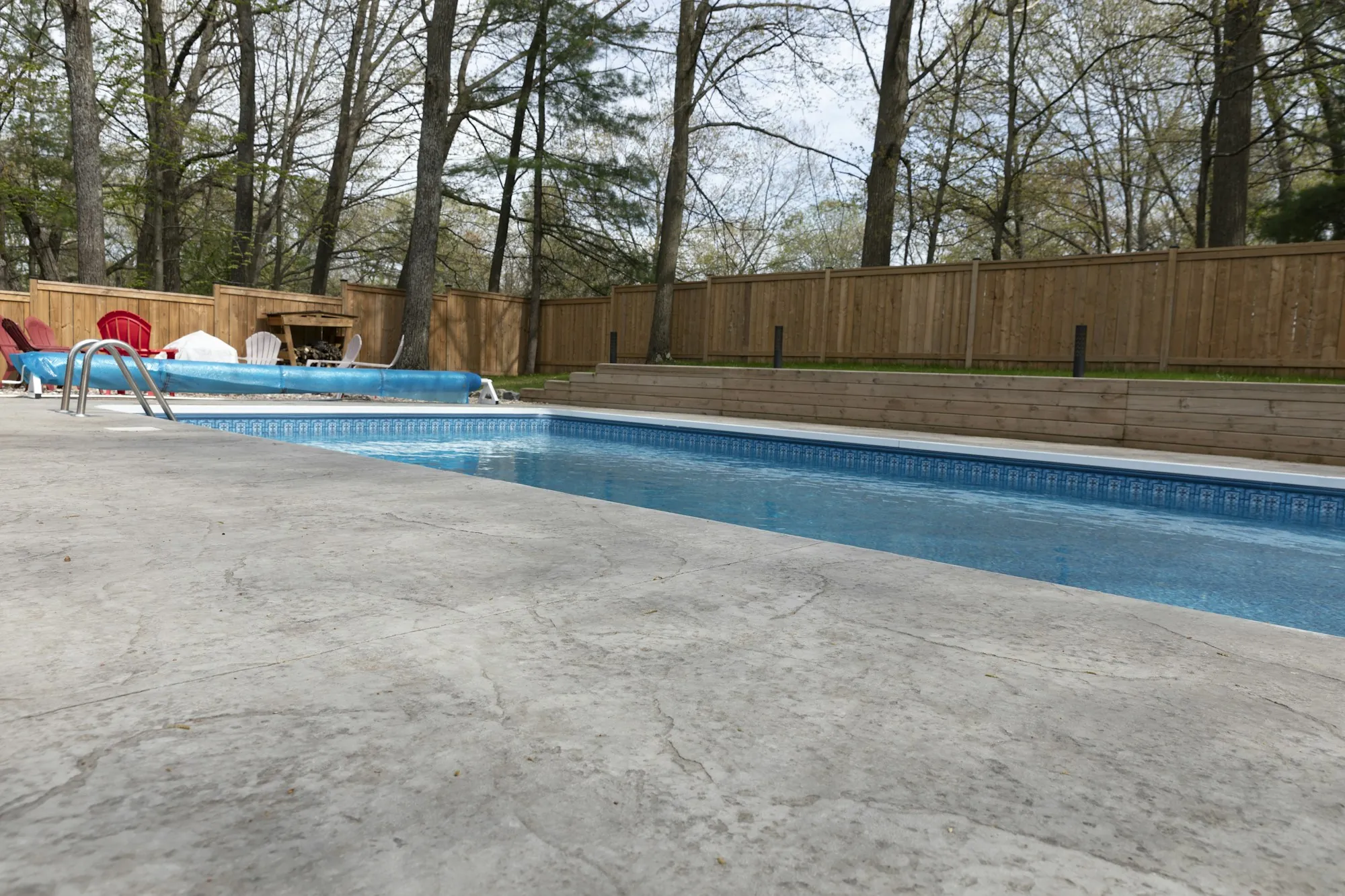
Patios laid out around the table, the grill and the chairs you really have, finished in broom, trowel or stamp. Pitched away from the foundation so storm water heads for the lawn, not the basement.
Concrete Driveways
Tired drive broken up and trucked away, subgrade dug and stone packed down, steel placed, new slab poured thick enough for the vehicles you park on it. Aprons tied cleanly to the street.
Commercial Concrete
Retail entry walks, HVAC pads and the slab under the dumpster corral, for shop, office and apartment owners. Pours timed so your front door never goes dark.
Three Moves From Phone Call to Finished Slab
You call, we scope it
Tell us what is there now, what you want instead and roughly how big. We ask about drainage problems, tree roots, access for the truck and how the space gets used. You hang up knowing whether it is a simple pour or something that needs a closer look.
We measure, then price it in writing
Someone walks the site, measures, checks grade and sketches the joint layout. The written price lists thickness, base depth, reinforcement, finish and tear-out as separate lines. Nothing hides in a lump sum.
Prep, pour, cut, clean
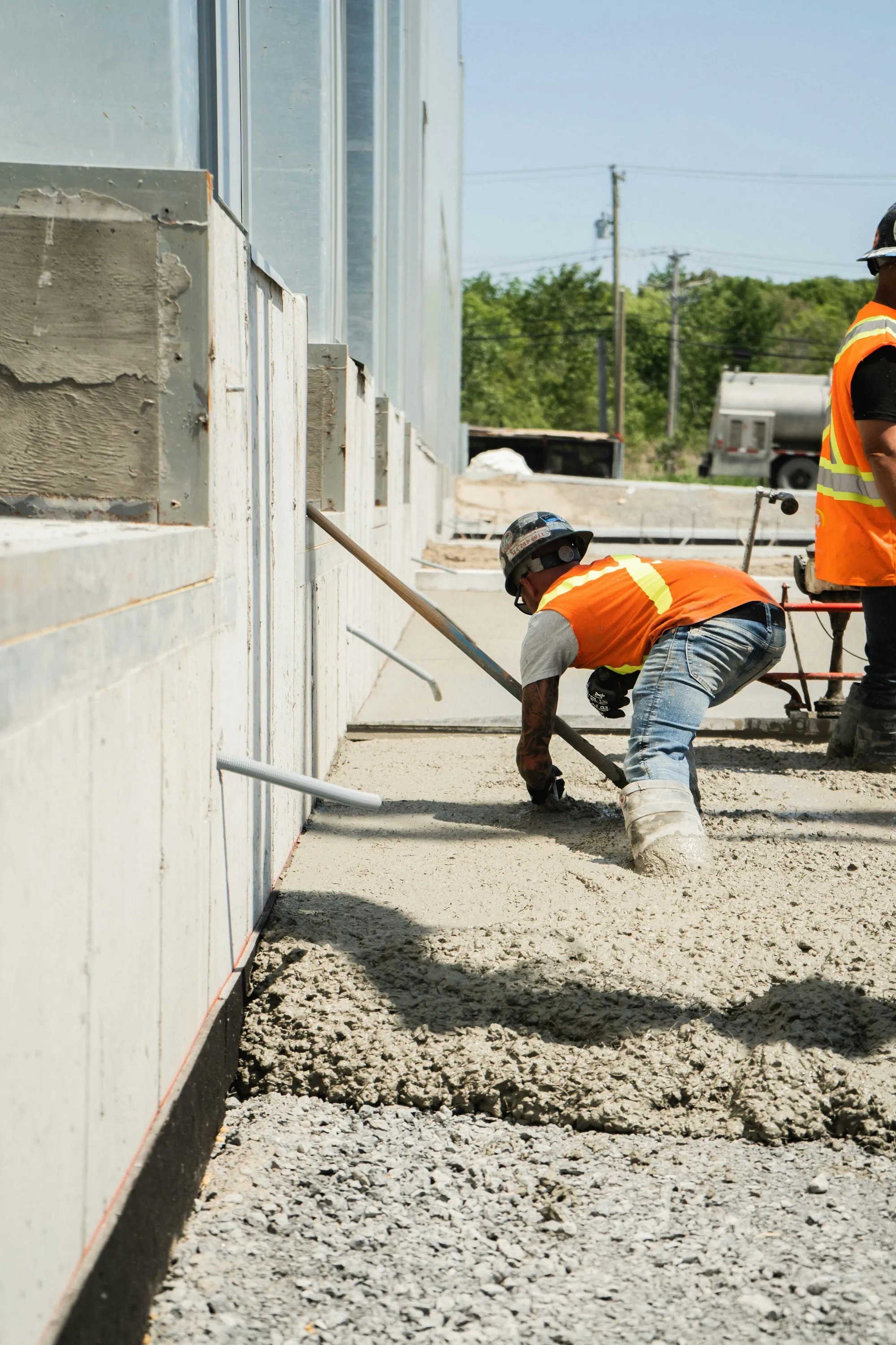
Rubble out first. Crushed rock in, packed with a plate tamper. Boards staked to grade, concrete placed and finished, cut lines sawn in early before the slab can pick its own. Forms come out after the cure and the yard is raked back.
What You Get When We Run the Job
Three things decide whether a slab still looks good in ten winters. Water, honesty about cost, and a crew that has seen more than one kind of job. Here is how we handle each.
Water has a plan
Every slab gets a measured fall away from the house and toward somewhere water can actually go: lawn, a swale, the street. We look at downspouts and neighboring grades before we set a single form. Puddles at the back door are a layout mistake, and we do not make it.
A price you can read line by line
Thickness. Base depth. Steel. Finish. Tear-out and haul-away. Each one is spelled out in writing before work begins. If something changes once the old slab is out, you hear it from us with a reason, not on the final bill.
Houses and businesses, same crew
A front walk on a cul-de-sac and a run of sidewalk outside a strip of storefronts get the same base, joints and finish standards. Property managers get pour dates that work around tenants. Homeowners get a crew that treats the yard like it matters.
Homer Glen and the Towns Around It
Homer Glen is mostly larger lots on clay soil, spread between 143rd Street and 159th Street with Bell Road running north to south through the middle and I-355 cutting along the east side. Long driveways, wide patios and big backyards are the norm here, and so is ground that holds water and heaves in a hard freeze. That is why base depth and drainage come up on almost every call. We pour across Homer Glen and the Will County and Cook County towns that border it: Lockport and Lemont to the west and north, Mokena and Orland Park to the south and east, and the Palos communities up the hill.
Big lots, long pours
A drive that runs a hundred feet back to a side-load garage needs more than one pour plan. We stage the work so each section is finished and jointed properly.
Clay means more base
Clay holds water and swells when it freezes. Extra compacted stone under the slab gives it something firm to sit on through the thaw.
One number, every town
Lemont, Tinley Park or Palos Heights, the same crew answers (815) 923-0376 and prices the job the same way.
Where our trucks go
- Homer GlenBell Road & 159th StreetHome base
- LockportState Street & 159th Street
- LemontState Street & 127th Street
- MokenaLa Grange Road & 191st Street
- Orland ParkLa Grange Road & 143rd Street
- Orland Hills159th Street & 94th Avenue
- Palos ParkSouthwest Highway & 123rd Street
- Palos HillsRoberts Road & 103rd Street
- Palos HeightsHarlem Avenue & 127th Street
- Tinley ParkHarlem Avenue & 171st Street
- Burr RidgeI-55 & County Line Road
Out past these towns? Ask anyway. A bigger job can justify the extra miles.
Ask whether your block is on our list: (815) 923-0376Cracks Will Happen. Where They Happen Is a Decision.
Concrete shrinks and moves. The question is whether the crack runs down a tooled joint where it looks intentional, or zigzags across the middle of your patio. Call and we will sketch the joint layout for your slab while you are on the line.
Sketch your slab layout by phone: (815) 923-0376Straight talk on size, thickness and cost. No obligation.
Concrete Questions We Answer Every Week
Short answers. If yours is not here, ask on the call.
Why does concrete crack, and is there any way to stop it?
No one can stop it completely. What you can control is the path. As the slab loses water it gets a hair smaller, and winter frost pushes on it too, so tension builds until something gives. Control joints cut about a quarter of the way into the slab create that weak line on purpose, so the crack forms down the joint instead of across the open surface. A firm base and slow, damp curing cut down on the random cracks even more.
What kind of foundation does an addition or detached garage need?
That depends on the structure, the soil and your village's building code. Most additions sit on footings poured below the frost line with poured walls on top, while some detached garages use a slab foundation with thickened edges. Your plans or your architect's drawings set the dimensions, and we pour to them.
What does flatwork mean?
Flatwork is any concrete poured flat on the ground rather than up as a wall. Driveways, patios, walks, pads and aprons all count. It lives or dies on base, thickness, pitch and joint placement.
What decides the price of a new concrete driveway?
Square footage is the starting point, then thickness, how big the tear-out is, how much base has to go in and whether the finish is broom or stamped. Access matters too: a truck that can back up to the forms pours faster than one that needs a pump or wheelbarrows. Your written price breaks each of those out so you can see what moves the number.
When can I walk on it, and when can I park on it?
Give it a day or two before anyone walks across it. Hold the car off for roughly seven days and anything heavy, like a moving truck, even longer. Strength keeps climbing for close to a month, so treat it gently early and keep it wet if the crew asks.
How thick should the concrete be?
Walks and patios usually run about 4 inches. Driveways are typically poured thicker, often 5 inches or more, and heavier still where trucks, trailers or RVs will park. We match the thickness to what will sit on the slab, then write it into the price.
What goes under new concrete?
Crushed rock, packed down in thin layers on top of solid subgrade. On clay ground we often dig deeper and add more stone, because clay holds water and moves when it freezes. The base is what keeps a slab from settling or tipping years later.
Will road salt ruin my new driveway?
Salt is hardest on young concrete, so skip deicers the first winter and use sand for traction instead. After that, a well-cured slab handles normal use far better, though heavy salting still wears the surface over time. Shoveling early and using salt sparingly goes a long way.
A Concrete Crew Run Like a Job Site, Not a Sales Floor
Concrete Contractor Homer Glen keeps things simple. Measure first. Price it in writing. Lay out the joints and the pitch before the forms go in. Pour, cut, cure, clean up. No upselling and no surprises on the last invoice, whether the job is one sidewalk square or a full driveway replacement.
See how we run a job
Get the Joint Plan and the Price on One Call
Give us rough dimensions and what sits on the slab today. By the end of the conversation you will have thickness, base, finish and a ballpark figure.
Working Homer Glen, Lockport, Lemont and the villages close by.